The Right Treatment at the Right Time Can Change the Future
Children are not simply smaller adults. Their facial bones, jaws, and teeth are actively developing—and that growth can create treatment opportunities that will not always remain available.
Dr. Jimmy Martineau is trained in both orthodontics and dentofacial orthopedics. Orthodontics focuses primarily on moving teeth. Dentofacial orthopedics involves evaluating and guiding the growth of the jaws and facial structures.
This training allows Dr. Martineau to look beyond whether a child's teeth appear straight. He evaluates how the upper and lower jaws are developing, how the bite is forming, whether the permanent teeth have adequate space, and whether an emerging problem may become more difficult to correct with time.

Growth Is an Opportunity—But It Does Not Last Forever
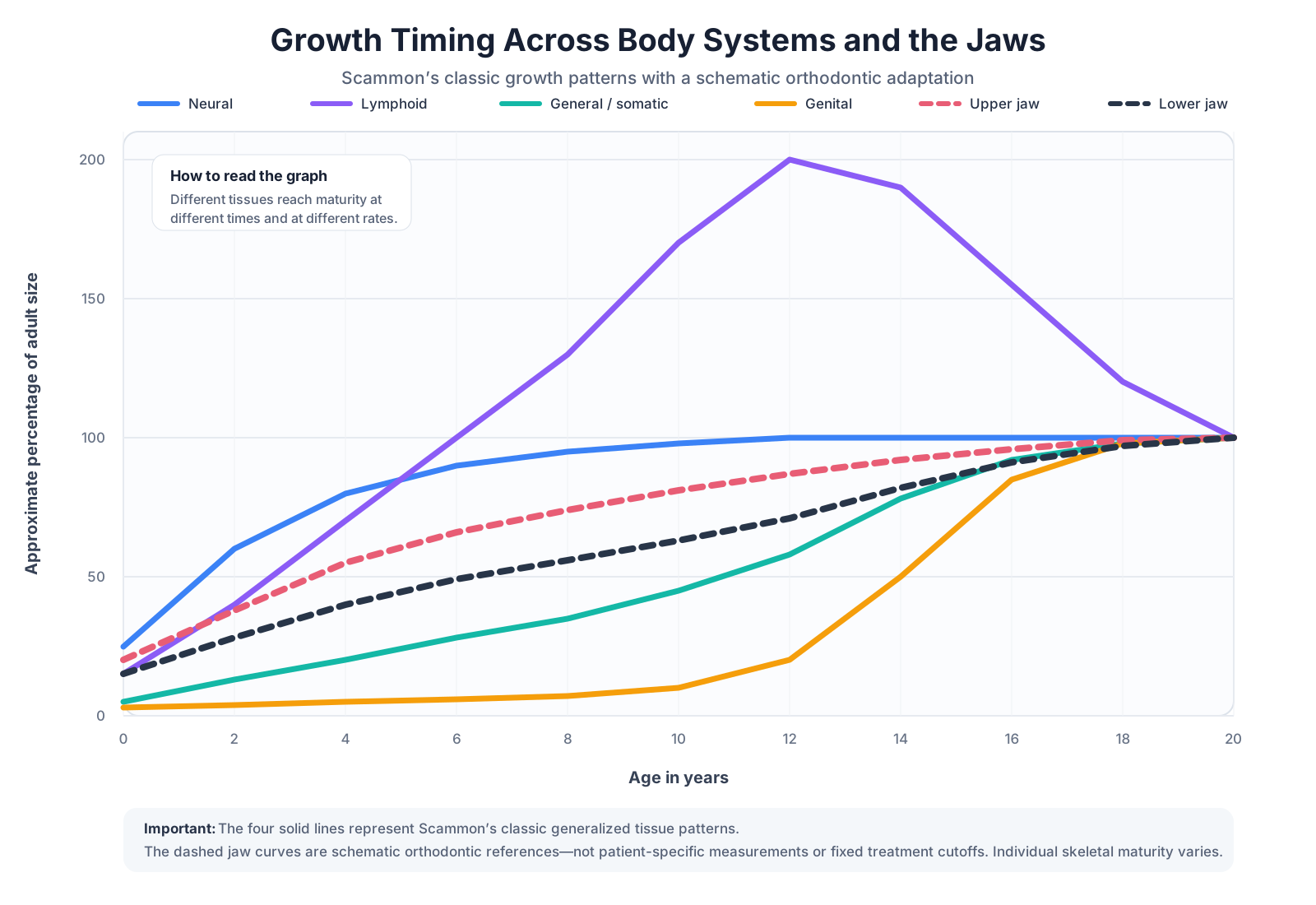
When a child is still growing, certain jaw discrepancies may be influenced through carefully timed orthopedic treatment. Once skeletal growth is complete, those same corrections may require more complex treatment, surgical assistance, or corrective jaw surgery.
This does not mean every child needs early orthodontic treatment. In fact, many children benefit most from careful observation until the ideal treatment window arrives.
The purpose of an early evaluation is to determine:
- Whether a growth problem is developing
- Whether treatment is needed now or later
- Which stage of growth offers the best opportunity for correction
- Whether waiting could make the problem more difficult to treat
- How the permanent teeth are developing beneath the gums
- Whether oral habits or functional shifts are influencing growth
The goal is not to begin treatment as early as possible. It is to begin at the most effective time.
What Is Guided Growth?
Guided growth uses a child's remaining development as part of the treatment process. Depending on the diagnosis, orthopedic appliances may be used to influence jaw width, jaw position, bite development, or the eruption of permanent teeth.
Properly timed treatment may help:
Early treatment cannot guarantee that surgery, extractions, or comprehensive orthodontic treatment will never be needed. Genetics and future growth remain important. However, missing an appropriate developmental window can eliminate treatment options that were available earlier.
Growth Problems With Important Treatment Windows
A Narrow Upper Jaw and Posterior Crossbite
When the upper jaw is too narrow, the upper teeth may fit inside the lower teeth. Some children compensate by shifting the lower jaw to one side when they bite.
If that shift continues during growth, it may contribute to asymmetric jaw development, uneven tooth wear, and an increasingly unbalanced bite. Palatal expansion during childhood can widen a truly constricted upper jaw and allow the lower jaw to close in a more centered position.
Expansion may still be possible in teenagers and adults, but skeletal maturity can make treatment more complex. Older patients may require miniscrew-assisted expansion, such as MARPE, or surgically assisted expansion.
Underbite and Upper-Jaw Deficiency
An underbite may develop because the upper jaw is too far back, the lower jaw is growing too far forward, or both.
When upper-jaw deficiency is identified during childhood, orthopedic treatment may be used to encourage forward development of the upper jaw while the facial sutures are more responsive. This opportunity becomes more limited as skeletal maturity approaches.
Class III growth can be unpredictable, particularly when there is a strong family history of underbite. Early treatment may improve the jaw relationship, but continued lower-jaw growth can still create a future need for additional treatment or jaw surgery.
Lower-Jaw Retrusion and Excessive Overjet
Some children have a lower jaw that appears underdeveloped or positioned too far behind the upper jaw. This can produce an excessive overjet, commonly described as “buck teeth,” and may increase the risk of injury to the upper front teeth.
In appropriately selected patients, orthopedic or functional appliances may be timed around the pubertal growth spurt to improve the jaw relationship and reduce the overjet.
If a severe skeletal discrepancy remains after growth is complete, the available choices may be limited to orthodontic camouflage or corrective jaw surgery. Identifying the problem before the growth spurt gives families more options.
Functional Jaw Shifts and Facial Asymmetry
A child may shift the lower jaw forward or to one side to find a comfortable bite. This can occur because of a crossbite, interfering tooth contacts, or an imbalance between the dental arches.
What begins as a functional shift can influence the direction in which the jaws develop. Early correction may allow the jaw to function in a more centered position and reduce the risk of the asymmetry becoming more established.
Crowding and Abnormal Tooth Eruption
Permanent teeth can become blocked, impacted, or diverted from their normal eruption paths when there is inadequate space or when baby teeth are lost at the wrong time.
Early monitoring allows Dr. Martineau to identify:
- Severe crowding
- Ectopic or impacted permanent teeth
- Missing or extra teeth
- Premature loss of baby teeth
- Permanent canines moving toward the roots of neighboring teeth
- Teeth that are not erupting on schedule
Treatment may involve preserving space, creating additional room, removing a baby tooth at the right time, limited braces, or expansion. Well-timed intervention can sometimes allow a permanent tooth to erupt more naturally and reduce the need for surgical exposure later.
Open Bite and Persistent Oral Habits
Thumb- or finger-sucking, prolonged pacifier use, abnormal tongue posture, and other persistent oral habits can affect the developing teeth and jaws.
When identified early, the habit and its underlying causes can be addressed while growth is still occurring. If the pattern continues for years, a primarily dental problem may become a more established skeletal problem that is harder to correct.
How Do We Know When the Time Is Right?
A child's birthday does not tell the entire story. Children mature at different rates, and different orthodontic problems have different treatment windows.
Dr. Martineau evaluates:
- Facial and jaw-growth patterns
- Dental development and tooth eruption
- The relationship between the upper and lower jaws
- Skeletal maturity and remaining growth
- Changes observed over time
- Family growth patterns
- Airway and oral-function concerns
- Tongue posture and oral habits
- The severity and progression of the problem
Sometimes treatment should begin promptly. Sometimes the best decision is to monitor the child at regular growth-and-development visits until the ideal window approaches.
Early Evaluation Does Not Always Mean Early Treatment
The American Association of Orthodontists recommends that children receive their first orthodontic evaluation by age seven. At this age, a child usually has a combination of baby and permanent teeth, allowing an orthodontist to identify developing problems that may not be visible to parents.
After an early evaluation, one of three things may happen:
No Treatment Is Needed
The teeth and jaws are developing normally.
Observation and Monitoring
Dr. Martineau monitors growth and eruption so treatment can begin at the most beneficial time.
Time-Sensitive Problem Identified
Focused early treatment is recommended to address the problem before the opportunity becomes more limited.
More Than Straight Teeth
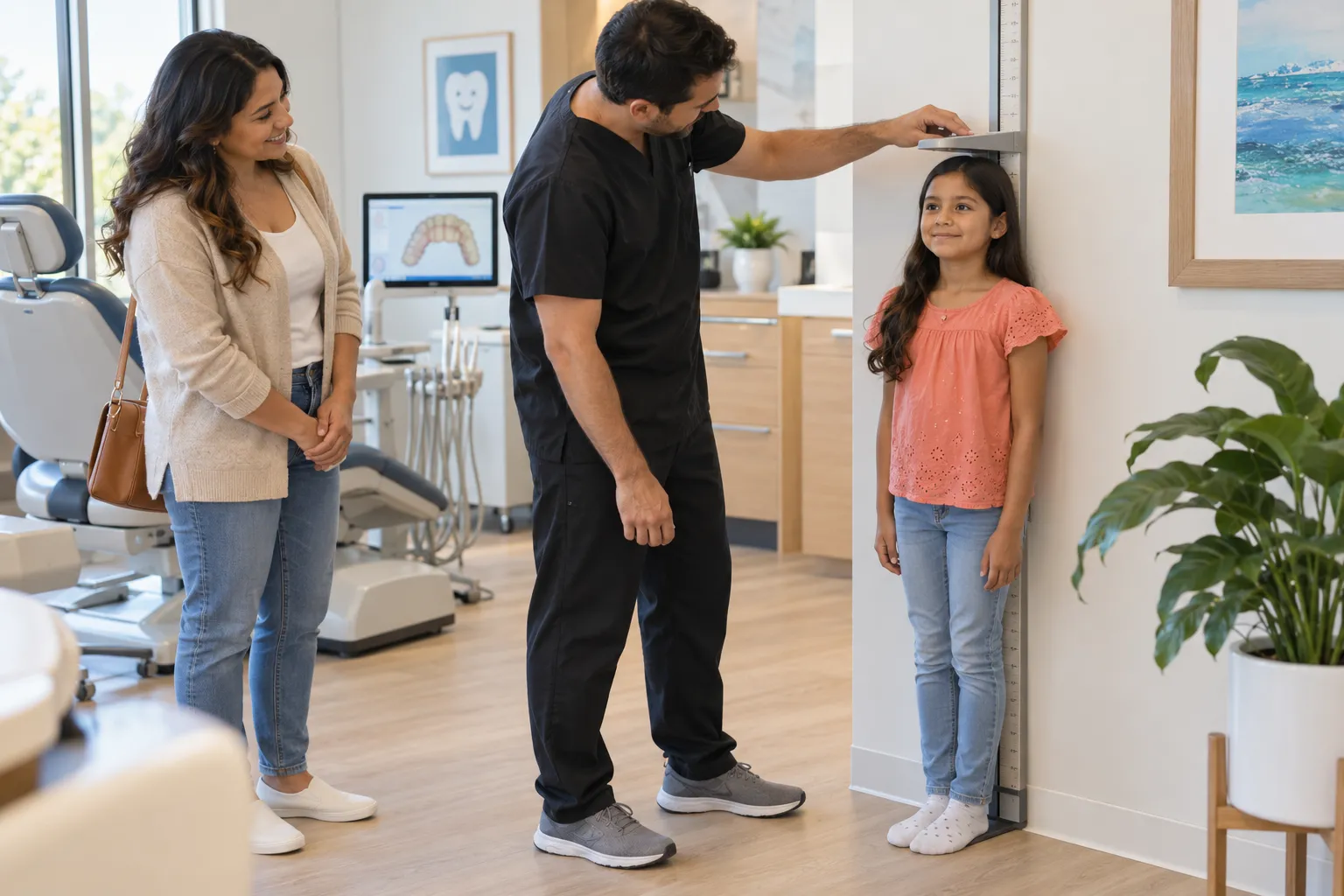
Dentofacial orthopedics requires an understanding of how the face and jaws grow—not simply how to align teeth.
At VIVA Orthodontics, every child's treatment is built around careful diagnosis, individual development, and appropriate timing. We intervene when growth offers a meaningful advantage, and we monitor when waiting is the healthier choice.
Because in growing patients, what we treat matters—but when we treat it can matter just as much.
Schedule a growth and development evaluation with Dr. Jimmy Martineau.
Frequently Asked Questions
Start With a Free Consultation
Take the first step toward the smile you’ve always wanted. Schedule your complimentary consultation today.